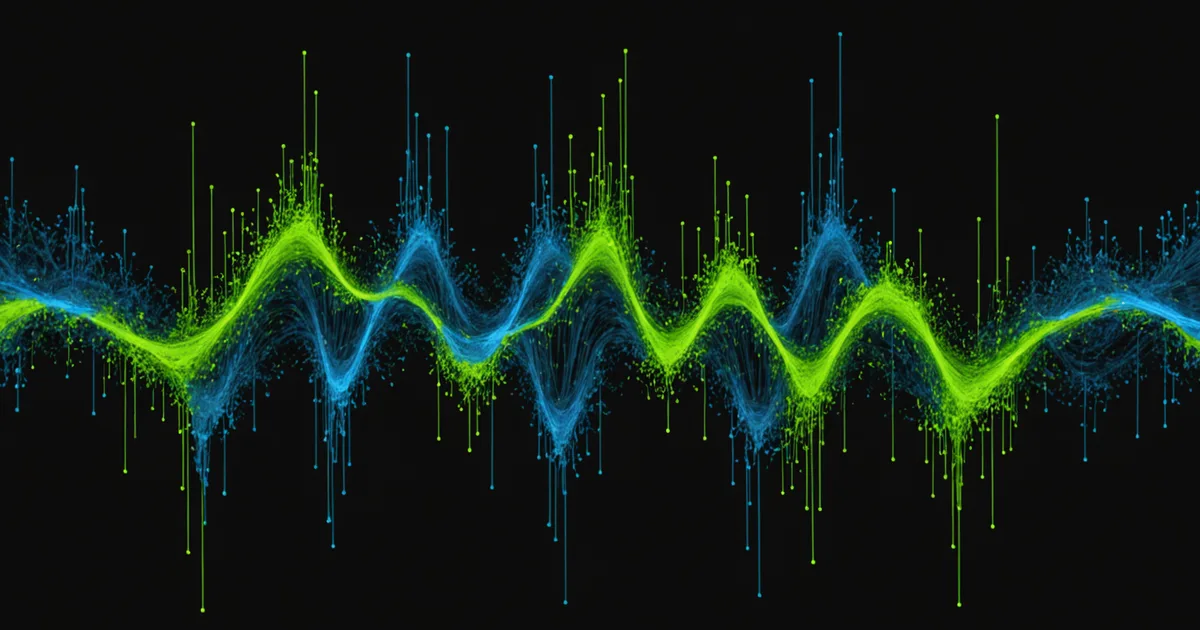
Pattern recurrence across sessions is the signal developers often dismiss, until weak clues line up and expose careful cheaters. Anti-cheat starts as signal processing, not policy. The useful question is which combination crossed which confidence threshold, and whether it fits the genre's risk tolerance. That makes the signal library more important than the ban policy.
Tashi monitors five main behavioral signals during every session. Together, they cover most competitive advantage abuse in action, shooter, and RPG multiplayer games. No single signal proves anything. We combine all five into a confidence score, then choose an action according to its position against configurable thresholds.
Signal 1: Velocity Anomaly
Every game sets a movement-speed limit, whether explicitly or through its physics. Characters accelerate, slow down, and reach terminal velocity within those rules. A velocity anomaly occurs when the position change between two server ticks implies a speed the engine cannot create through legitimate input.
The measurement window matters most. One tick may show a legitimate lag-recovery outlier or server correction. We score velocity anomalies across a rolling window of 20 to 40 ticks, seeking sustained excess instead of brief spikes. That limits false positives from rubber-band correction while retaining continuously active movement hacks.
Speed hacks use different implementations. Some alter engine-level game-loop timing; others inject changed position packets at the network layer. Velocity anomaly detection sees both because it evaluates the result rather than the technique.
Signal 2: Position Teleport
Teleport checks are simple in principle: flag a position update whose travel distance is impossible for the elapsed time and the player's current movement state. Calibration is necessary because respawns, fast-travel systems, and server-authoritative corrections can all look like legitimate teleports.
We separate sanctioned teleports, which are server-issued and fit the game state, from unsanctioned ones, which are client-reported and conflict with the prior trajectory. A player moving across a map in one tick without an explanatory server-side state transition matches the pattern we flag. We compare position events with the server's state log to verify whether the transition was expected.
This catches position-injection exploits and wall-clip abuse especially well, including movement through geometry to reach advantageous positions.
Signal 3: Input Timing Irregularity
Aimbot checks are the familiar use of input timing analysis, but the signal applies beyond targeting. Human motor control contains noise: when tracking a moving target, players make micro-corrections, overshoot, and readjust. Gaps between input events form a distribution shaped by cognitive and motor latency.
Aimbots remove that noise. They can generate sub-millisecond targeting timing, follow moving targets through wall geometry invisible to human vision, and snap to targets faster than the human reaction floor by an order of magnitude. We measure three sub-signals: inter-event timing variance, meaning gap consistency; angular velocity profile, meaning human-like crosshair or cursor movement; and reaction time distribution, including responses clustering below the human physiological floor of roughly 150ms.
Input timing irregularity produces our highest false-positive rate. High-sensitivity mice, high-polling-rate controllers, and highly skilled players may all look superficially like aimbots. We therefore never act on it by itself. At least one corroborating signal must join it before the confidence score reaches the action threshold.
Signal 4: Stat Outlier and Behavioral Deviation
Session statistics provide useful information, but a sophisticated cheater can manage them to avoid detection. A stronger indicator is how behavior departs from that player's own baseline across sessions.
We keep a rolling distribution of each player's performance: accuracy percentile, kill-to-death ratio range, headshot rate, and average engagement range. The signal activates when current-session values sharply depart from that established distribution. Someone at the 40th to 60th percentile for 30 sessions who suddenly reaches the 99th percentile is notable. Someone at the 99th percentile consistently from session one is different, since there is no prior baseline to depart from.
This catches players who turn cheats on mid-session or use them only in competitive modes. It also detects account boosting, when a skilled player intentionally performs poorly to remain in lower matchmaking brackets. The same deviation model handles both, with opposite polarity.
Signal 5: Pattern Recurrence Across Sessions
The most difficult cheaters remain just below the threshold for each signal. They move quickly without seeming impossible, aim well without appearing inhuman, and post elevated stats that still fit a skilled player's plausible range.
Pattern recurrence measures whether weak indicators persist between sessions. One session containing a velocity-anomaly cluster is unclear. That cluster repeated across 12 consecutive sessions in the same gameplay contexts is not. We retain each player's anomaly history and search for patterns that stay below action threshold individually but persist collectively.
This signal intentionally activates slowly. It is not for real-time action. Instead, it enters a review queue for manual confirmation or aggregated automated action. Cheaters who stay beneath per-session thresholds still get caught, but later.
Weighting and Confidence: What Actually Matters
These five signals do not catch every cheater. Sophisticated client-side cheats below detection resolution, hardware exploits, and collusion among multiple legitimate accounts need other methods.
In the titles from our early-access pilots, these signals cover most competitive advantage abuse: movement hacks, aimbots, position exploits, and stat manipulation. That group makes up most player-reported complaints in the competitive games we have instrumented.
Studios have the most control through confidence-threshold settings. Relaxed communities and casual competition should use high thresholds and favor false negatives. Competitive games with real prizes should use lower thresholds and accept more false positives, with review before permanent bans. Tashi provides a threshold slider for each signal, allowing independent tuning. We start conservatively because a false ban costs more community trust than a missed cheater, though that setting does not suit every game.
The signal library also changes over time. When cheat developers release new techniques, we add signals. These five are our current baseline, not the limit. A cheat pattern outside this set is exactly the feedback that can produce the next library signal.
Tashi's anti-cheat runs server-side, with no client install. Try the free tier for up to 50 concurrent players, then view the documentation.